Regarding the Proposal on Heating Tariffs and the Introduction of a Social Consumption Norm
As part of its ongoing research on tax expenditures, taxation, and improving the targeting of government subsidies, the Institute has presented the findings of its analytical studies.
These materials represent the results of independent scientific research conducted by the Institute's authors. They are analytical in nature and should not be interpreted as measures that must be adopted by government authorities.
In recent days, the Institute's proposal to transition from universal subsidies for district heating tariffs to targeted social assistance has attracted considerable attention in the media and on social media platforms.
As some reports have presented the issue in a one-sided manner—suggesting that "heating tariffs will increase fivefold"—we consider it necessary to provide the following clarification.
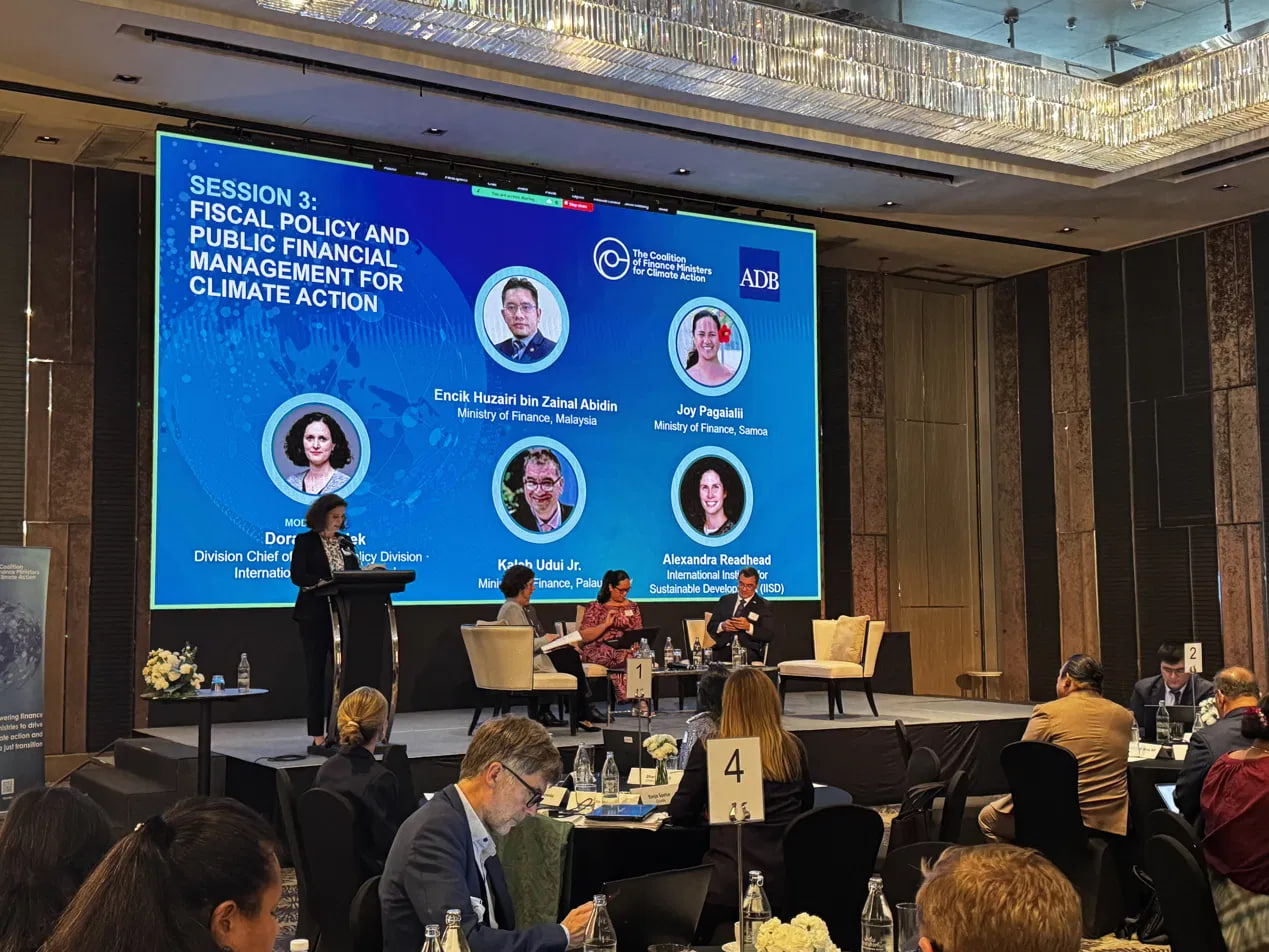
First, the proposal is the outcome of an analytical and scientific study conducted by the Institute's researchers. It was presented during the Fiscal Dialogue event solely as an idea for discussion among experts and specialists. It does not constitute an official decision, policy document, or draft law. No changes have been made to the current heating tariff system or payment procedures. Consumers continue to pay for heating services under the existing rules.
Second, the purpose of the proposal is not to introduce a universal increase in tariffs, but rather to improve the targeting of government support. Under the current system, heating subsidies are provided equally to all households regardless of their income or financial circumstances. The proposal suggests maintaining a preferential tariff for consumption within a defined social norm—up to 60 square metres per household or 16 square metres per registered resident (equivalent to 64 square metres for an average four-member household)—while strengthening support for genuinely vulnerable families. According to the Institute's analysis, under this approach, heating payments for 45.4 percent of apartments in the city of Tashkent with a floor area of up to 60 square metres would remain completely unchanged.
Third, the primary objective of the study is to provide a scientific assessment of policy options for ensuring a more equitable and targeted allocation of public resources, directing government support to those who need it most. Over the medium term, the Institute proposes providing targeted cash assistance to low-income households through the Unified Register of Social Protection. Such analytical studies are intended to evaluate the potential advantages and disadvantages of alternative policy approaches rather than to prescribe a specific course of action.
Fourth, the Institute's mission is fundamentally based on scientific research and the exchange of ideas. Scientific progress is achieved through open discussion, diverse perspectives, and constructive debate. Any proposal put forward by the Institute should therefore be viewed not as a final decision, but as an issue submitted for public and professional discussion.
We highly value the opinions and comments expressed by the public, experts, and other stakeholders and regard such dialogue as a healthy and natural part of evidence-based policymaking.
The Institute will continue to conduct its research in accordance with the principles of openness, objectivity, and due consideration of the interests of citizens.
Fiscal Analysis Institute under the Ministry of Economy and Finance